It's About Time!
A place to discuss our evolving knowledge of the nature of time and causality. For physicists, computer scientists, mathematicians, neuroscientists, philosophers, and practicing engineers.
Follow
Paul Borrill
on Twitter
Follow
IAT!
on Clubhouse
Follow
Paul Borrill
on Clubhouse
Follow
Paul Borrill
on LinkedIn
Spacetime is Doomed.
A relationship with time is intrinsic to everything we do within and between our networked computers. An assumption that time is a smooth, irreversible, global Newtonian/Minkowskian background is a common but rarely questioned belief in computer science; yet, physicists now know this model to be incorrect. Our guest speakers are all people who have thought deeply about the nature of time. We collectively realize that a new understanding could potentially revolutionize the way we approach physics, computer science, chemistry, neuroscience, and many other subjects.
Upcoming Speakers
10-Dec-2022 – Bryan Roberts – Author “Reversing the Arrow of Time”
No Sessions _ December 24th & 31st – Holiday Break
7-Jan-2023 – Ric Arthur – Author “The Reality of Time Flow: Local Becoming in Modern Physics”
14-Jan-2023 – Lucien Hardy – Perimeter Institute
21-Jan-2023 – Giulia Rubino – University of Bristol
4-Feb-2023 – Johannes Fankhauser – University of Oxford
Latest Episodes
10-Dec-22-
Misfiring Arrows of Time-
Bryan Roberts
Our naïve human senses can feel like there is an asymmetry in time when there is not. Here Bryan describes what is needed to have a true arrow of time, in the sense that 'time itself' has an asymmetry.
Recent Episodes
3-Dec-22-
Fusions of Consciousness-
Donald Hoffman
Donald explores a dynamical theory of conscious agents beyond spacetime, and its projection via decorated permutations onto spacetime.
12-Nov-22-
Physics in 9 lines - Results and Remarkable Consequences with Suggestions for the Teaching of Physics-
Christoph Schiller
400 years of modern physics are summarized in 9 short lines - 5 principles and 4 sets of choices - that contain general relativity, quantum theory and the standard model of particle physics.
26-Nov-22-
Entanglement, Spacetime, and Quantum Gravity-
Mark Van Raamsdonk
Mark talks about the holographic approach to quantum gravity, the emergence of spacetime from quantum entanglement, and what this might teach us about the real world.
19-Nov-22-
Quantum steampunk: Thermodynamics meets quantum information-
Nicole Yunger Halpern
Victorian thermodynamics crystallized the notion of entropy, which quantum information science has extended. Fusing these modern and antiquated sciences, quantum thermodynamics is real-life steampunk.
12-Nov-22-
Physics in 9 lines - Results and Remarkable Consequences with Suggestions for the Teaching of Physics-
Christoph Schiller
400 years of modern physics are summarized in 9 short lines - 5 principles and 4 sets of choices - that contain general relativity, quantum theory and the standard model of particle physics.
05-Nov-22-
The Age of Entanglement
Sky Nelson-Isaaacs
Is the moon there when nobody looks? Understanding entanglement and the 2022 Nobel Prize in Physics. Sky Nelson-Isaacs will explain entanglement through the works of physicist N. David Mermin.
2022-Oct-22
Spacetime from Quantum Entanglement: A Ticket to Unification
-Clara Aldegunde
This year’s awarded Physics Nobel Prize reveals the vital role of entanglement in understanding the Universe, but what if spacetime was essentially threaded by these connections between particles on the quantum level? Clara Aldegunde discusses this hypothesis in this episode. Expressing quantum entanglement as a geometry and being able to introduce it to Einstein’s spacetime equations is one of the most powerful candidates for a Theory of Everything, reconciling General Relativity and Quantum Mechanics and achieving the ultimate goal of modern physics.
2022-Oct-1
Quantum Indefiniteness of Causal Relations.
-Professor Časlav Brukner
Traditionally, quantum theory assumes the existence of a fixed causal background structure. However, if one applies the laws of quantum mechanics to causal relations, one can imagine situations in which the causal sequence of events is not always fixed, but subject to quantum uncertainty. Such indeterminate causal structures could enable new quantum information processing and provide methodological tools for quantum theories of gravity.
Sep .24.22
The Limits of Physics
-Maaneli Derakshani
What are the limits, if any, of what can be explained by physics? For that matter, what is physics? It is fashionable among many physicists and philosophers these days to presume that, at bottom, all that exists in the world is 'physical' and in principle can be fully described in physical terms, even if that is beyond our capabilities at present. In this presentation, I will sketch what physics is in general terms, what it has been since its inception, and then give a prime example of something that will forever be beyond physical description/explanation/understanding: the most basic laws of logical inference, such as modus ponens, and our ability to reason in accordance with them. This presentation is a tribute to the brilliant logician and philosopher, Saul Aaron Kripke, who recently passed away.
Sep.17.22
Causality from a Promise Theory Perspectives
-Mark Burgess
Causality has long been a subject of controversy in philosophy, but in physics the meaning is simple: is there a traceable network of influence that maps out a process from start to finish? In the past, physics has viewed causality in a ballistic sense of colliding messengers (billiard balls or canon balls). In the information sciences, this limited view leads us into difficulties, e.g. in quantum mechanics. In most information sciences, the way we consider space and time is based on a cellular model, with interior and exterior processes at different scales. Mark talks about how this idea of autonomous agents (Promise Theory) can be used to clear up a few mysteries.
2022-Aug-27
A Computational+ Compositional Perspective on the Nature of Time.
-Jonathan Gorard
Jonathan discusses how new ideas from applied category theory and the Wolfram Physics Project may help unify distinct notions of time from quantum mechanics, relativity and computational complexity.
Aug.13.22
Reality+ Virtual Worlds and the problems of Philosophy.
-David Chalmers
David argues that virtual reality is genuine reality. Virtual reality isn't fiction or an illusion. We can live a meaningful life in a virtual world. We might even be in a virtual world already. He uses this analysis to shed light on coming VR technology and to address traditional philosophical questions about knowledge, reality, consciousness, and value.
Aug.6.22
Space and time in Wolfram Physics
-Mark Jeffery
Mark talks Wolfram Physics turning our concepts of space and time upside-down. It sees space not as continuous but as a graph of discrete nodes and edges. And it rescues time from its diminished role as a mere component of space-time.
Jul.2.22
Arrival movie: A non-zero-sum game
-Alex Gullen
Alex explores through the lens of the movie ‘Arrival’ a few key questions and issues that collectively face humanity: are we alone? He’ll further discuss a couple key concepts presented in the movie like language, morphology and technology of the Heptapods; and, implications of intelligent extra-terrestrial life like signals in space, the Fermi paradox, the Drake equation, and the Great Filter.
What People Say
Meet Your Host
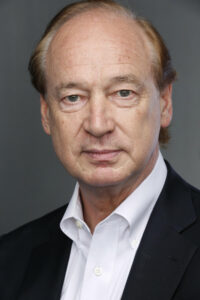
Paul Borrill is the founder and CEO of Daedaelus Corporation and is a leading industry expert on the foundations of resilient network and storage infrastructures. Paul has served on: Apple’s Infrastructure team. VP/CTO for VERITAS Software. VP/Chief Architect for Storage Systems at Quantum Corporation. Distinguished Engineer, Director of Architecture & Performance, and Chief Scientist for IR at Sun Microsystems.
Paul was educated In Physics at the University of Manchester, has a Ph.D. in Physics from University College London, and is a graduate of the Stanford Executive Program.
“Many of the most intractable mysteries in cosmology, physics, and biology have to do with our insufficient understanding of time and its irreversibility in the face of the apparent symmetry of the laws of nature. A deeper understanding of time and related mysteries of entropy and causality may unlock new horizons in many disciplines at once. IAT is a weekly conversation where scientists, philosophers, and engineers meet to advance our understanding of time.”